.png?width=1322&height=525&name=LEANSITE%20LOGO%20(COLORED).png)
This guide covers creating one asset and maintaining its core record. Use the bulk-import guide when you need to add many assets from a CSV file.
Before you startYou need access to the property’s asset inventory and permission to create or edit assets. Prepare the asset name, type, class and location. Add the serial number, purchase details, warranty information and technical documentation when they are available.
1. Open the asset inventorySelect Asset in the main navigation. Search or filter the list before adding a record so that you do not create a duplicate. The inventory may include assets from several authorised properties.
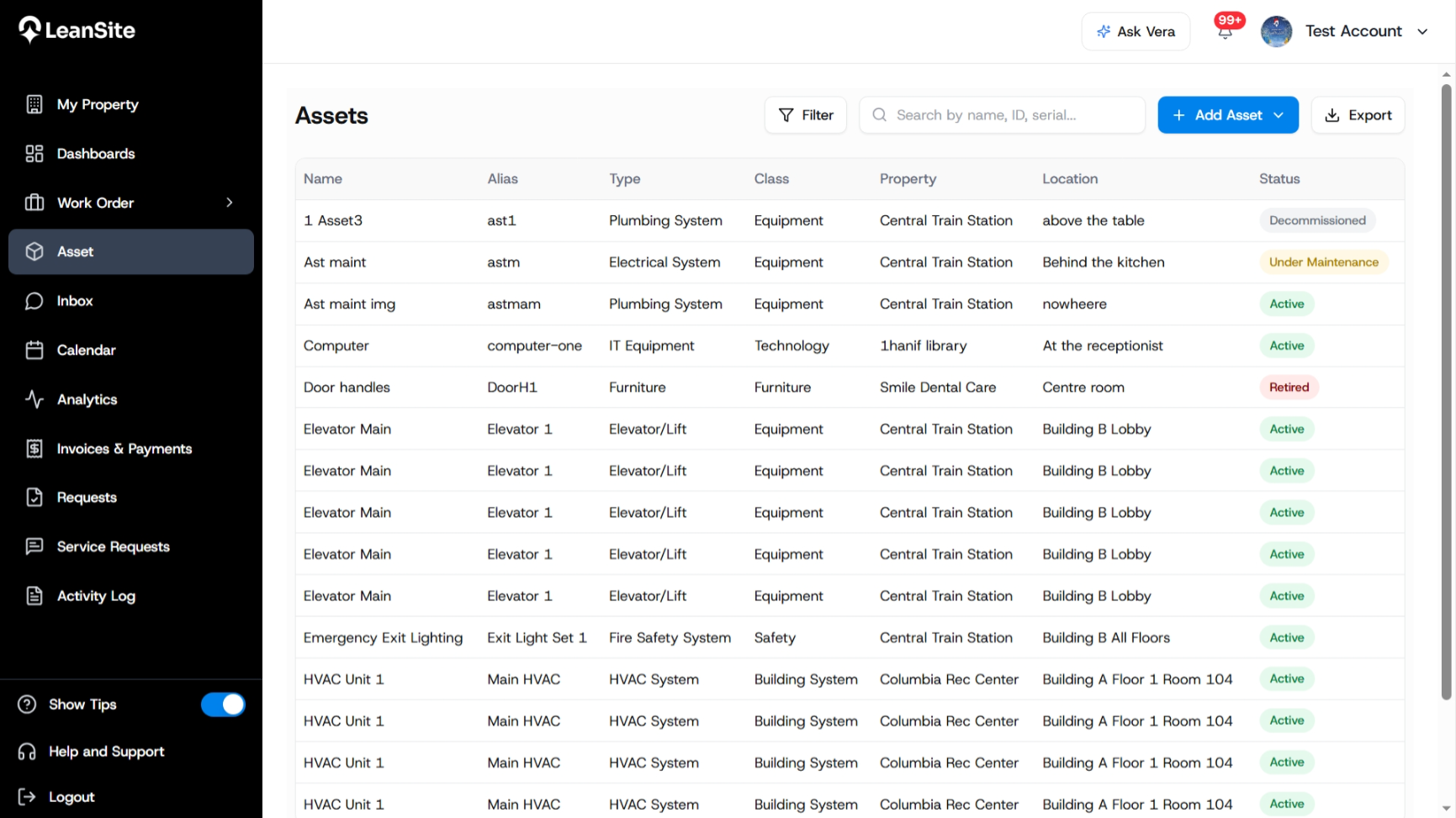
Alt text: Asset inventory showing searchable asset records, property, location, status and the Add Asset action.
2. Start a new asset recordSelect Add Asset. Complete the four required fields:
|
Field |
What to enter |
|---|---|
|
Asset Name |
A clear operational name that people will recognise. |
|
Type |
The equipment or asset type used for classification. |
|
Class |
The applicable asset class. |
|
Location |
The property where the asset is installed or kept. |
Use a consistent naming convention, especially when several properties contain similar equipment.
3. Add identification and lifecycle detailsAdd useful optional information, including alias, serial or model number, purchase date, purchase cost, expected life, replacement cost, warranty details, specifications, notes and documentation. These fields improve later quoting and repair-or-replace decisions when accurate source information is available.
Set the current status from the supported lifecycle states: Active, Under Maintenance, Decommissioned or Retired.
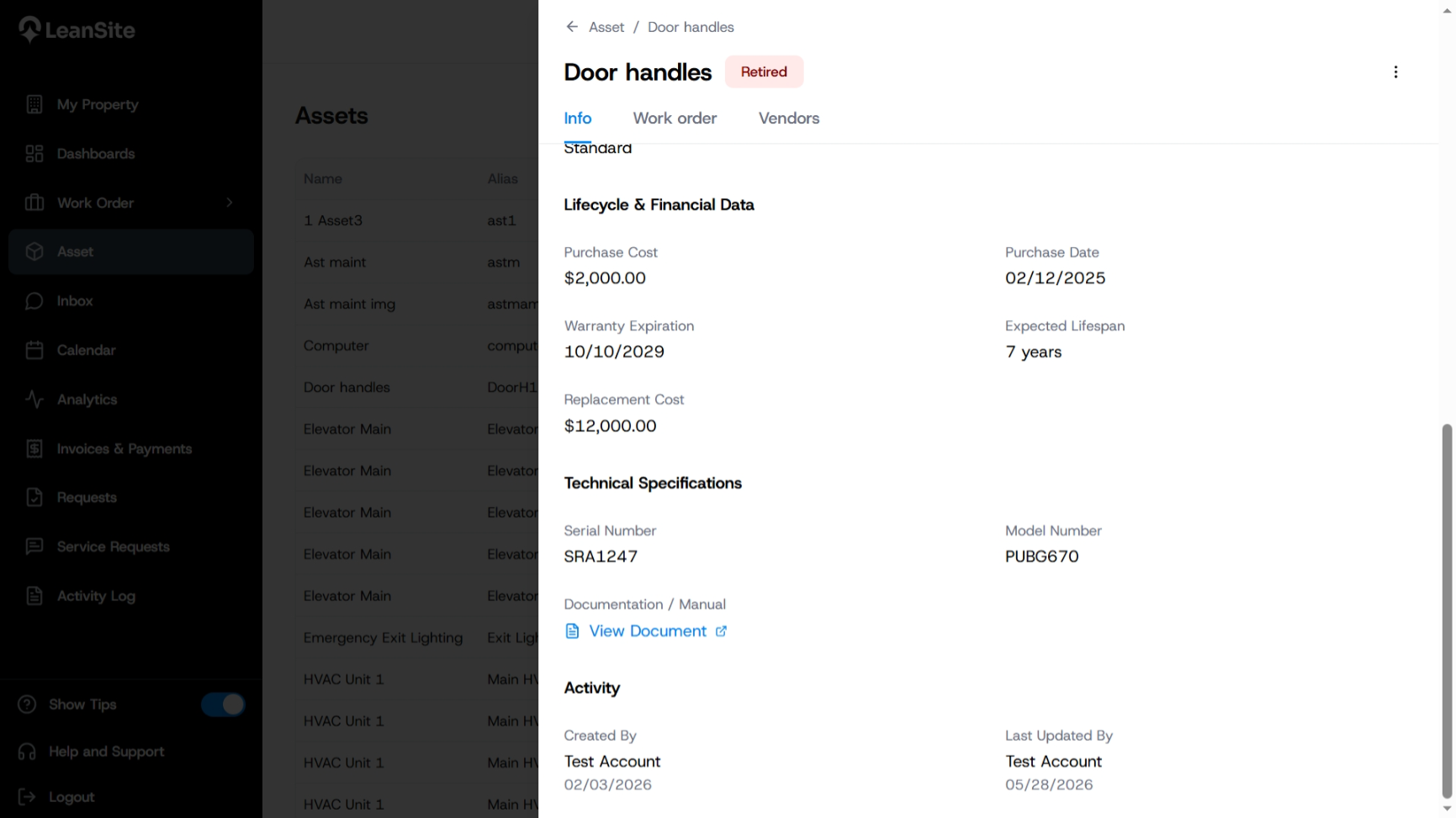
Alt Text: Specific Asset Lifecycle & Financial Data
4. Save and verify the generated IDSelect Create or the current save action. LeanSite generates the Asset ID. Open the saved record and confirm its property, location, status and identifying information before using it on a work order.
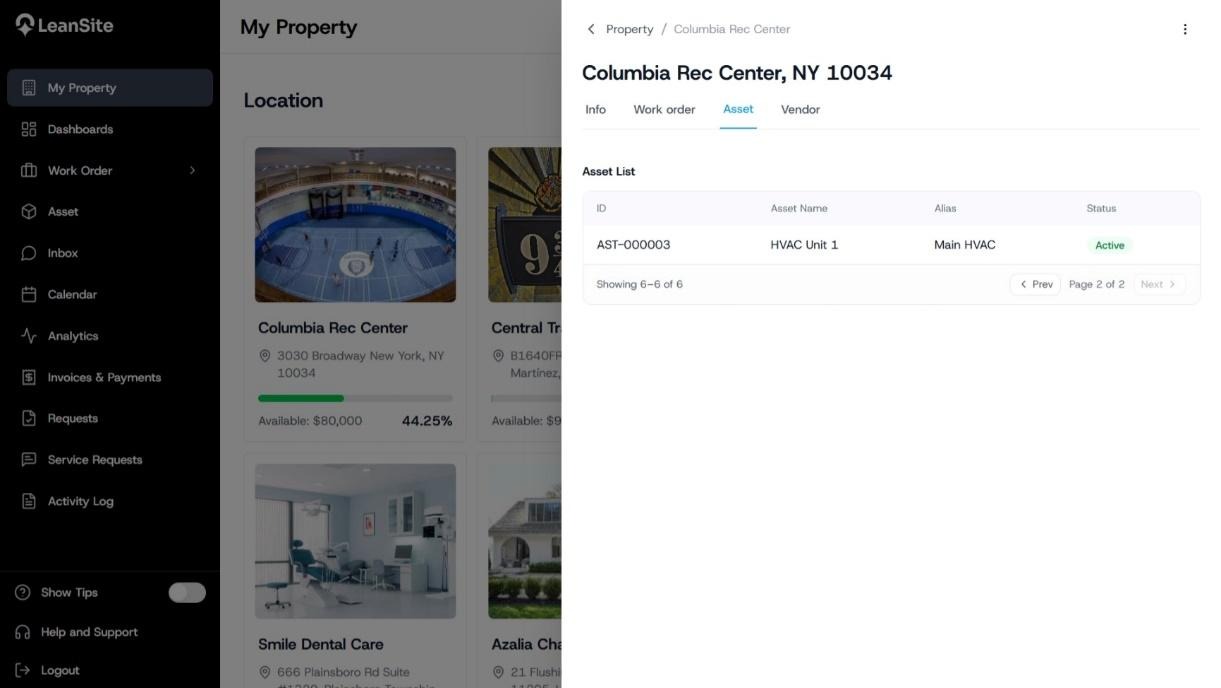
Alt text: Property Asset tab listing HVAC Unit 1 with its generated asset ID, alias and Active status.
5. Maintain the asset recordUpdate the status and specifications when the asset changes. Retiring an asset uses a soft-delete model: the record is removed from active use while its historical data remains available for audit and maintenance records. Asset changes are logged with the user, timestamp and changed values.
The v1 asset inventory does not include parent-child asset hierarchies, parts management, preventative-maintenance scheduling, QR scanning, depreciation or warranty alerts.
Expected resultThe asset has a generated ID, belongs to the correct property and is available for supported work-order linking. Its record can accumulate maintenance and vendor history over time.
If you cannot create or edit the assetConfirm that you can access the asset’s property and that your role permits asset changes. If a matching record already exists, update the existing record. Contact an Org Owner or LeanSite Support when the property assignment or permissions appear incorrect.